
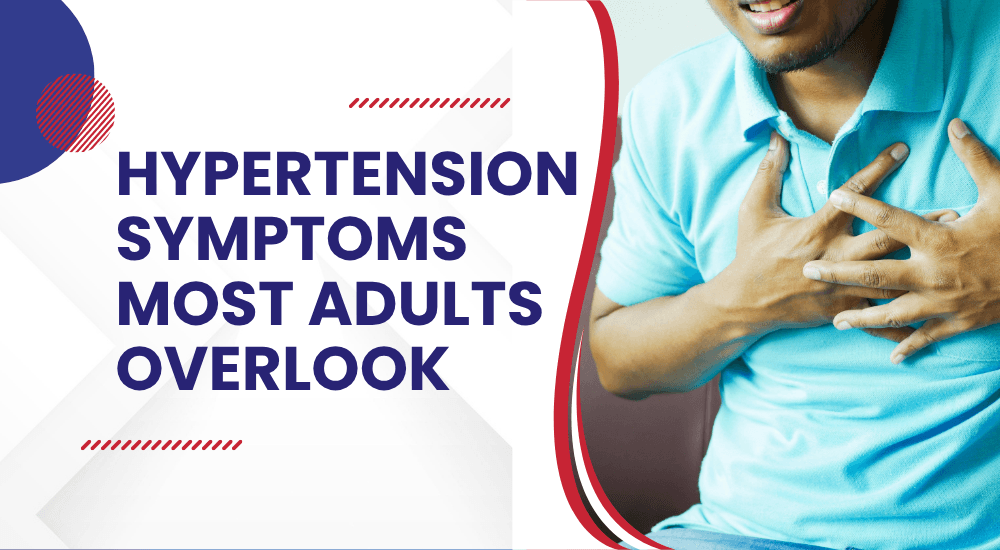
High blood pressure rarely shows active symptoms, it develops quietly in the background for years before it shows up as a heart attack, a stroke, or kidney damage. The early signs are mild and easy to brush off, a headache on waking, slight breathlessness on the stairs, blurry vision after a long day, a tight feeling in the chest. Most adults put these down to stress, work, or age. A simple BP check tells you whether the cause is something more serious.
According to the Roma Hospital General Medicine team, Best Hospital in Kompally, Hyderabad, “Patients walk in with strokes, and when we look back, the small symptoms had been there for two or three years. Nobody connected the dots.”
Headache every morning, or breathless climbing one floor of stairs?
Which are the everyday symptoms as early signs of hypertension?
Most early hypertension signs feel ordinary. That’s the trap.
Morning headaches that ease by afternoon
BP runs highest in the early hours. A dull ache at the back of the head on waking, fading after breakfast, is something we want to check.
Breathlessness on a single flight of stairs
When nothing else in your fitness has changed, hints at the heart working harder than it should. Often dismissed as “getting older”.
Blurry vision late in the day
Raised BP affects the small blood vessels at the back of the eye. An optometrist can sometimes pick this up before a physician does.
Chest tightness on stress or exertion
Just a heavy or squeezing feeling that settles in five minutes, gets ignored more than any other symptom.
Adults noticing any of these for more than a week should get assessed by a physician and have their BP recorded properly.
How is hypertension confirmed and managed once detected?
A single high BP reading isn’t a diagnosis. Confirmation needs a few steps, and treatment depends on the cause and severity.
Repeat measurements over two to three weeks
One high reading in the clinic doesn’t seal it. Home monitoring, with a validated upper-arm cuff, gives a far more honest picture.
Baseline tests
To check what hypertension might already be doing. Kidney function, cholesterol, fasting sugar, ECG, and sometimes an ECHO of the heart. The point is to see the damage map, if any.
Lifestyle changes come first
Salt restriction, weight loss, daily walking, alcohol cut-off, and sleep. These move BP by 10 to 15 points when done seriously.
Medication starts when lifestyle alone
Medication starts
When lifestyle alone won’t bring numbers below 140/90, or earlier in patients with diabetes, kidney disease, or a previous cardiac event. Most patients do well on one or two tablets a day.
For patients managing other long-term conditions alongside BP, our piece on pregnancy care covers how chronic conditions interact with overall health planning.
Why Choose Roma Hospital?
The General Medicine team at Roma Hospital handles a wide spread of adult medical conditions, including hypertension, diabetes, thyroid disorders, infections, and long-term care for chronic illness. Backed by in-house pathology, radiology, ECG, and ECHO, the workup happens in one place rather than across labs.
Hypertension care isn’t a one-time prescription. So every follow-up checks not just the BP number, but kidney function, cholesterol trends, and whether the current medication is still the right one.
Call +91 62093 33999 to book your consultation.
FAQ's
Can hypertension exist without symptoms?
Yes, most people with high BP feel completely normal for years.
What BP reading is considered high?
A consistent reading above 140/90 in adults is classified as hypertension.
How often should adults check their blood pressure?
Once a year for healthy adults, every three months once diagnosed.
Does hypertension always need medication?
No, mild cases often respond to weight loss, salt reduction, and exercise.