
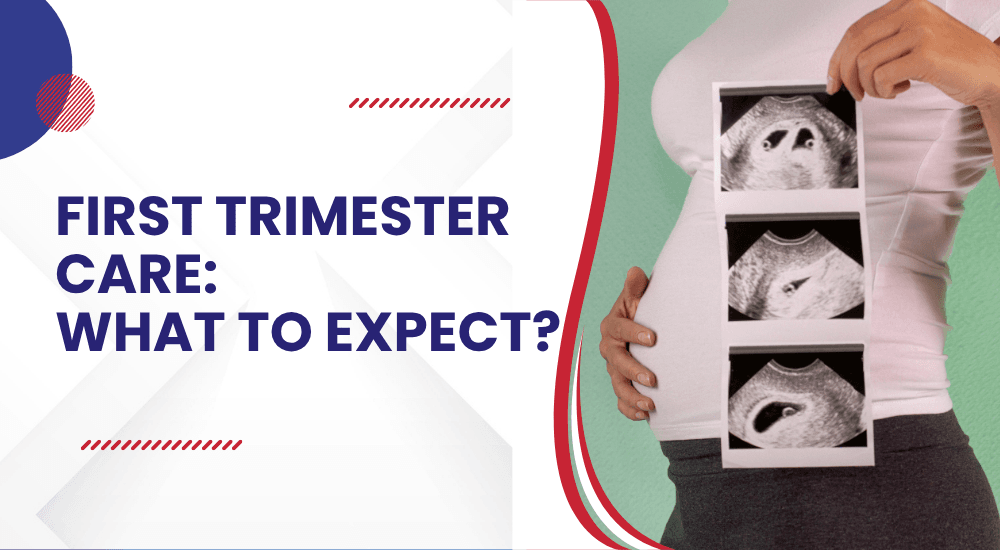
First trimester care is mostly about confirming the pregnancy, getting the basics in place, and keeping an eye out for anything that needs attention early. That means a dating scan to confirm how far along you are and that the heartbeat’s there, starting folic acid, a round of routine blood tests, and advice on handling the nausea and tiredness that tend to come with these first weeks. The first trimester runs through week twelve. It’s the stretch where the baby’s main organs form, which is exactly why the early steps carry so much weight.
According to Dr. Pulla Anusha, gynaecologist in Kompally, “the first scan and the folic acid matter more than people realise this early, because a lot of what protects the pregnancy is decided in the weeks before most women even feel pregnant.”
Just found out you’re pregnant and not sure what’s next?
What happens at your first pregnancy visits?
The early appointments are part confirmation, part planning, and they set the tone for everything that follows.
Dating scan
Confirms how many weeks along you are and checks the heartbeat, usually done somewhere between six and eight weeks once a test has come back positive.
Folic acid
Goes top of the list, ideally started before conception but begun straight away if not, since it cuts the risk of neural tube defects as the spine forms.
Blood tests
Cover the essentials, blood group, hemoglobin, sugar, thyroid, and a few infection screens that shape how the pregnancy gets managed.
Lifestyle basics
Get sorted early too, what’s safe to eat, what to drop, which medicines to stop, and how to ride out the nausea without reaching for anything risky.
Booking in early with the antenatal care team means these happen on time rather than getting squeezed in late.
When should you call a doctor in the first trimester?
Most early pregnancy symptoms are normal and pass, but a few are worth a call rather than a wait.
Heavy bleeding
With cramping is the one not to sit on, since it can signal a miscarriage or, less often, a pregnancy growing in the wrong place.
Severe vomiting
that stops you keeping food or even water down has tipped past ordinary morning sickness and needs treating before dehydration sets in.
Sharp one-sided pain
Low in the belly, especially with dizziness, always warrants a same-day check.
Fever or burning urine
Points at an infection, and infections in pregnancy are best caught quickly rather than ridden out.
Some pregnancies need a closer watch from the start, which is where knowing the signs of a high-risk pregnancy early really pays off.
Why Choose Roma Hospital?
Dr. Pulla Anusha is a Consultant Obstetrician and Gynaecologist with MBBS and MS (Gynaecology & Obstetrics), leading the obstetrics and gynaecology department at Roma Hospital. Antenatal care, from the first positive test through to delivery, is the core of her day-to-day work, with normal and caesarean deliveries handled in-house.
What patients get is unhurried, plain-language care from the very first visit, with in-house ultrasound and lab work so most of the early checks happen in a single trip. Every plan is shaped around the individual pregnancy rather than a generic schedule, with round-the-clock obstetric backup if anything comes up.
Call +91 62093 33999 to book your consultation.
FAQ's
When should I see a doctor after a positive test?
Ideally within the first few weeks, to confirm the pregnancy and start care.
Is morning sickness normal in early pregnancy?
Yes, mild nausea is very common, though severe vomiting needs medical attention.
When is the first pregnancy scan done?
Usually between six and eight weeks, to confirm dating and the heartbeat.
Why is folic acid important early on?
Usually between six and eight weeks, to confirm dating and the heartbeat.
Disclaimer:
This blog is intended for educational purposes only and does not replace professional medical advice.
Please consult a certified medical professional for guidance specific to your condition.