
By 4 months after hip replacement, most patients walk without a cane, drive short distances, sleep through the night, and manage daily activities without pain medication. Mild morning stiffness, occasional swelling after a long day, and faint clicking sounds in the joint are all normal at this stage.
Full recovery continues until 9 to 12 months after surgery, so month 4 is a milestone, not the finish line. The work done in these middle months shapes how the joint feels a year from now.
At Roma Hospital, a multispeciality hospital in Kompally, Hyderabad, the orthopedic team has guided many patients through exactly this stage of recovery, including those who travelled to us for revision care from other hospitals.
Where Most Patients Are at the 4-Month Mark
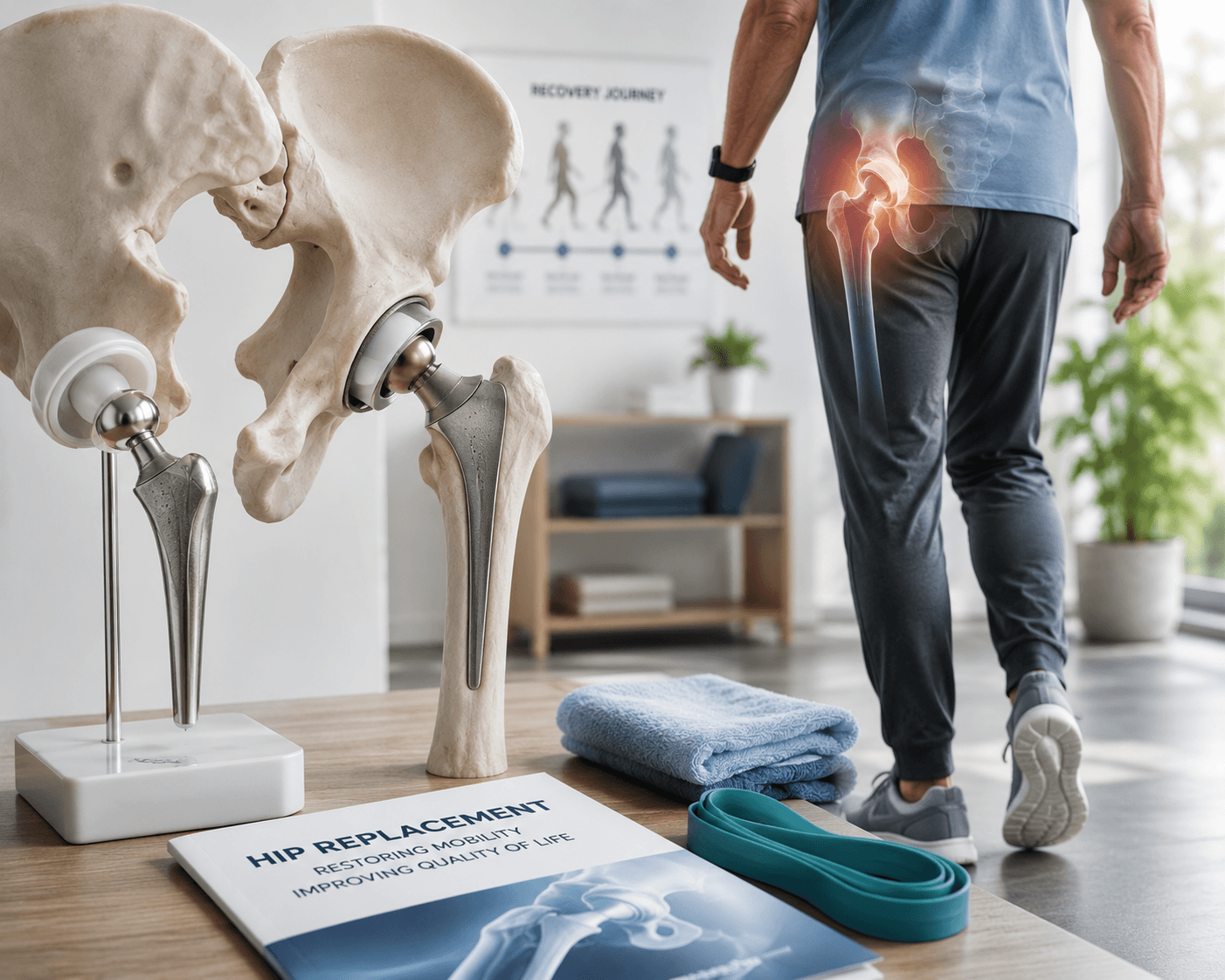
By month 4, the hardware in your hip has fully integrated with the bone. The surgical wound is long-healed. The muscles around the joint, which were cut or stretched during surgery, are mostly back to working order. Most patients at this stage:
Walk without any assistive device:
no cane, no walker, comfortable on most surfaces.
Drive short distances:
confidence with both braking and turning has returned.
Sleep through the night:
hip pain no longer wakes you up, side sleeping is back.
Climb stairs naturally:
one foot per step instead of one-at-a-time.
Manage daily activities:
cooking, light housework, shopping, social outings.
Stopped most pain medication:
occasional paracetamol on a tough day, nothing daily.
That’s the average picture. Some patients sail past these by month 2. Others take 6 months. Starting fitness, age, weight, pre-surgery hip condition, and how disciplined you were with physiotherapy all play a role.
Worried your recovery is behind where it should be? Get an expert opinion before another month passes.
What's Normal at This Stage (Even If It Doesn't Feel Like It)
A lot of patients at month 4 quietly worry that something is wrong because of mild symptoms that are actually completely normal. Worth knowing what falls under “keep going, you’re fine”:
Morning stiffness:
the first 20 to 30 minutes after getting out of bed can feel achy and tight. Loosens up as you move. Often improves by month 6 to 9.
Mild swelling after a long day:
hours on your feet can still cause puffiness around the hip and thigh. Elevation and ice settle it within a few hours.
Clicking or popping sounds:
a faint click during certain movements is common as the new joint surfaces glide. As long as it’s not painful, it’s just noise.
Sensitive or itchy scar:
the skin around your incision can take 6 to 12 months to fully settle. Small numb patches often fill back in over a year or two.
Weather-related aches:
many patients report their hip “feels” the rain or a temperature drop. Annoying but harmless.
Exercises You Should Still Be Doing

Gentle range-of-motion exercises from week 1 are old news. At month 4, the focus shifts to strength and endurance. The gluteus medius muscle on the side of your hip, critical for walking stability, takes a long time to fully rebuild. Stop exercising at month 4 thinking you’re done, and you’ll plateau, sometimes with a slight limp that becomes hard to fix later.
Most patients at this stage should be doing some combination of:
Stationary cycling:
low impact, builds endurance, very joint-friendly.
Swimming or pool walking:
strengthens without joint load.
Side-lying leg lifts:
the single best exercise for the gluteus medius.
Walking:
30 to 45 minutes daily on flat ground.
Standing hip abduction:
with a light resistance band.
Mini-squats and sit-to-stand drills:
builds quadriceps strength for stairs and standing up.
If you’re not sure what your specific exercise plan should look like at this stage, this is exactly the kind of question to bring up at your next follow-up. Personalized rehab plans matter more than generic routines, which is why Roma Hospital’s joint replacement specialists tailor recovery roadmaps to each patient’s goals.
Activities to Still Avoid
Month 4 is too early to forget hip precautions completely. Exact restrictions depend on the surgical approach (anterior, posterior, or lateral), so always confirm with your own surgeon. In general at this stage, most patients should still avoid:
High-impact activities:
running, jumping, or contact sports.
Heavy lifting:
anything over 15 to 20 kg.
Deep squats:
below 90 degrees, especially under load.
Prolonged leg crossing while sitting:
especially for posterior-approach patients.
Sudden twisting:
turns while the foot is planted.
Very low seating:
sofas or chairs where the knees go above the hips.
Clearance for higher-impact activities such as jogging, doubles tennis, or skiing usually comes around month 6 to 9, and only when the surgeon approves it based on your specific implant and bone quality.
How Recovery Compares Across Different Patient Profiles
Hip replacement recovery looks different depending on your starting point. Here’s a snapshot of how the typical journey unfolds:
Patient Profile | Typical Picture at Month 4 | Main Focus of Care |
Younger active patient | Walking unaided, light gym work, may be pushing too hard | Pacing activity to protect long-term implant life |
Older patient | Walking well indoors, some stiffness, building outdoor confidence | Strength training, fall prevention, balance work |
Diabetic or hypertensive patient | Slower wound healing, possibly behind on exercise milestones | Coordinated care with general medicine team |
Revision surgery patient | Slower overall recovery, longer physiotherapy needed | Patience, structured rehab, regular follow-up |
Patients managing chronic conditions like diabetes or blood pressure during recovery often benefit from coordinated care with an experienced internal medicine consultant, since uncontrolled chronic conditions slow healing and raise infection risk.
When the Pain Isn't Normal

Most mild aches at month 4 are part of recovery. But some symptoms shouldn’t be dismissed. Call your orthopedic team if you notice:
Pain that’s getting worse over weeks rather than better
Sudden, sharp pain after a fall, a twist, or for no obvious reason
New limp that wasn’t there a month ago
Fever, redness, warmth around the incision, or any new discharge
Pain in the groin or buttock that wasn’t there at month 2 or 3
Numbness or weakness in the leg or foot
Calf pain, swelling, or warmth (could indicate a blood clot, urgent)
For any of these symptoms, don’t wait until your next scheduled follow-up. Same-week appointments are available for recovery issues, and a 24×7 multispeciality hospital emergency line for anything more urgent.
Noticing any of these warning signs? Don’t wait for your next scheduled review. Speak to an orthopedic specialist today.
Why Choose Roma Hospital for Hip Replacement Care
Hip replacement recovery is about more than the surgery itself. It needs a team that follows you through the full year of healing, not just until discharge.
Built to international standards, Roma Hospital is a multispeciality hospital in Kompally that brings that range together:
- Experienced surgical leadership: Department led by Dr. Venkata Swamy Boorgula, MBBS, MRCS, FRCS, with 25+ years of consultant experience in orthopaedic trauma and joint replacement in London, UK.
- Long-term follow-up: Annual reviews and X-ray monitoring beyond the first year to catch subtle implant issues early.
- Coordinated care: Chronic conditions like diabetes and blood pressure managed alongside orthopedic recovery, under one roof.
- Modular operation theatres: Latest-generation implants, in-house digital imaging, no waiting between diagnosis and surgery.
- 24×7 emergency response: For urgent recovery concerns at any hour.
- Patient-first communication: Every option explained in clear language, every recovery plan built around your work, lifestyle, and mobility goals.
FAQ's
Is walking 30 minutes a day enough exercise at month 4?
For most patients, yes, as a baseline. But walking alone won’t rebuild the hip and thigh muscles that need targeted strength work. Combine walking with side-lying leg lifts, cycling, or pool exercises for the best outcome.
When can I return to driving long distances?
Short local drives are usually fine by month 2. Long drives over 2 hours can still cause stiffness and swelling at month 4, so plan breaks every 45 to 60 minutes to stand, stretch, and walk.
Why does my hip feel worse on some days than others?
Activity level, sleep, weather changes, and how much you’ve been on your feet all affect daily comfort. A bad day at month 4 isn’t a setback unless the trend continues over weeks.
Can I go back to gym workouts at month 4?
Light gym work like stationary cycling, upper body weights, and core exercises is usually fine. Avoid heavy squats, deadlifts, leg press, and any high-impact cardio until your surgeon clears it (usually month 6 to 9).
How long until I forget I've had a hip replacement?
Most patients say the new hip feels “natural” between months 6 and 12. Some sensations like mild morning stiffness or weather-aware aches can stay mild but lifelong. Pain that disrupts daily life shouldn’t be one of them.